A network of 35,000 smartphone sound sensors was deployed on the Peaq Network ecosystem to collect hyper-local noise pollution data for well-being.
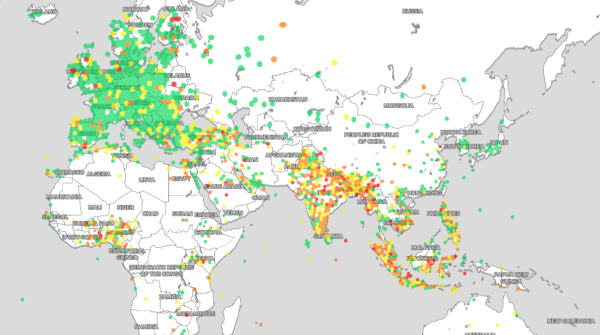
News The Silencio network has over 35,000 smartphones working as noise sensors via the Peaq Network blockchain ecosystem in an effort to combat the issue of global noise pollution. On Sept. 19, the Silencio Network announced its integration with Peaq as it continues to expand its reach to include more noise sensor devices. Silencio reports that the noise sensors in its network cover 176 countries and anticipate working on one million devices by 2024. The project calls its work “Web3 citizen science,” in which community members receive tokenized rewards for providing “hyper-local” noise pollution data. Cointelegraph spoke with Silencio’s two co-founders, brothers Thomas and Theo Messerer, about the reason behind tokenizing sound data. Thomas said the seed for the idea was planted over 20 years ago. Growing up with a hearing-impaired parent meant they were always sensitive to noise pollution in different places, along with their experience later in deploying Decentralized Physical Infrastructure Networks (DePINs) in Europe. Theo told Cointelegraph that to date, Silencio has collected over a billion data points from the more than 35,000 devices employed in the Silencio network. He said the primary contributions have come from Europe, North America and Southeast Asia.
He pointed to Silencio’s explorer maps, which show average noise level variations from country to country. He said trends are subject to change as more data is collected and processed at the moment: “It’s important to note that we’re still in the early stages,” he said, adding that the company began deploying its technology on smartphones in February. “It’s premature to determine noise levels in detail due to limited data density and variety at this point.” Along with personal reasons for being interested in noise pollution data, hearing loss is one of the most prevalent global health concerns, according to the World Health Organization. Till Wendler, the co-founder of Peaq, highlighted that “noise pollution costs trillions to world GDP each year” and using Web3 mechanisms, along with “citizen science to crowdsource the data, will be crucial in solving this crisis.” When asked how user privacy is factored into the equation, Theo said a “range of measures” are implemented to protect users. “We are measuring decibel levels and not the actual audio content. Decibel levels measure the intensity of sound,” he clarified. Given that location is inherently tied to the project, he said location tracking is something users can opt-in for with “explicit” consent. Additionally, all the data collected from users in a given place is anonymized and encrypted in the app. Silencio’s solution for combating noise pollution is one of many new initiatives in the Web3 space that works with physical objects, like smartphones, charging stations or vehicles, to create efficiency and a bridge to the rapidly expanding digital world.

Join us on social networks