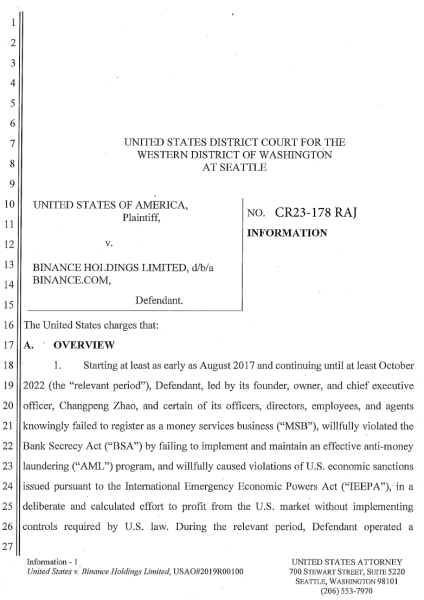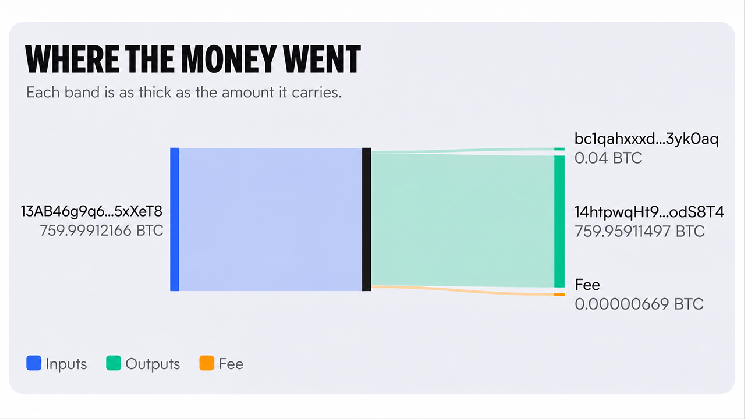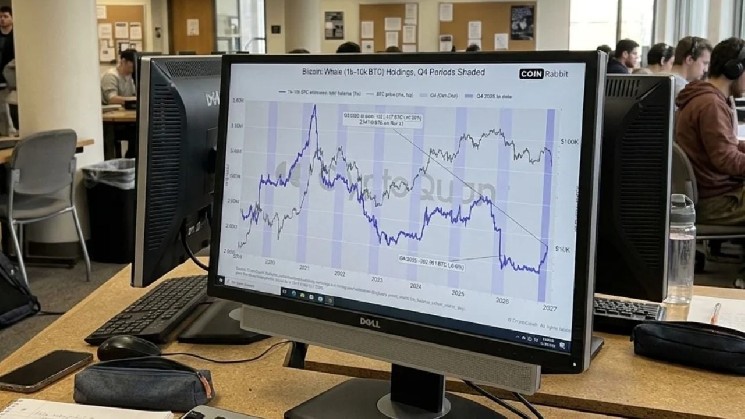
U.S. government agencies have spent months, sometimes years, investigating Binance in the lead-up to unsealing an indictment against the exchange.
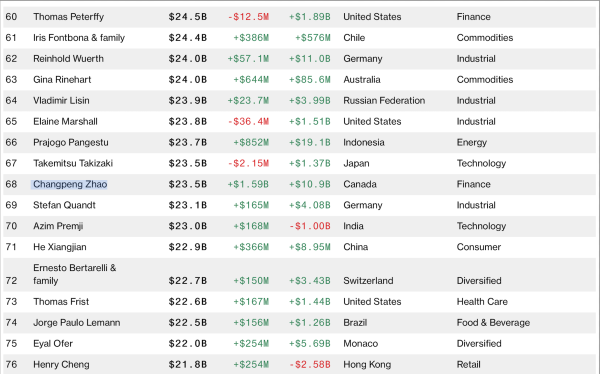
6738 Total views 36 Total shares Listen to article News Binance and its founder Changpeng”CZ” Zhao has admitted to violating United States laws around money laundering and terror financing — agreeing to pay $4.3 billion in fines. The Justice Department’s probe into Binance started years earlier, and in the meantime, other U.S. regulatory agencies launched their own actions against the crypto exchange. Here’s what happened. Reports emerged that Binance is the target of several United States law enforcement investigations — some dating back to 2018. Binance came under U.S. Congress scrutiny on March 1 as Senators Elizabeth Warren, Chris Van Hollen and Roger Marshall sent a letter to Binance CEO Changpeng “CZ” Zhao and Binance.US CEO Brian Shroder requesting answers to several allegations and the companies’ balance sheets. The Senators were not satisfied with the responses and the executives were later accused of lying. The Commodity Futures Trading Commission (CFTC) filed suit against Zhao, chief compliance officer Samuel Lim and Binance, naming seven counts of trading irregularities and market manipulation. The CFTC investigation reportedly began in 2021. Zhao vehemently denied the charges. Bloomberg reported that Binance is under investigation by the Justice Department for violations of sanctions against Russia. Binance maintained a presence in Russia through September. The Securities and Exchange Commission filed suit against Binance, Binance.US and Zhao on June 5 with 13 charges, including unregistered securities sales, allowing U.S. customers to use the Binance exchange, intermingling customer and corporate funds and wash sales. The SEC suit against Binance, Binance.US and CZ. Source: Court Listener The SEC got an emergency restraining order against Binance.US and the exchange drastically cut back its U.S. activities. Four senior members of the Binance.US team left the company, starting a wave of departures that continued for months. The Justice Department was reported to be considering fraud charges against Binance. To avoid a run on the exchange, the department was leaning toward fines or non-prosecution agreements at that time. Binance.US sought a protective order against the SEC, accusing the SEC of launching a “fishing expedition” in its discovery process. Binance insisted it was acting in good faith in the process. Binance.US laid off a third of its workforce — about 100 people and its CEO Brian Shroder also departed. The SEC complained to the court about a lack of cooperation from Binance in its discovery process. Binance.US scored a minor victory when the court denied the SEC access to the exchange’s software. Instead, the judge suggested that the SEC should be more specific in its discovery requests. Zhao, Binance and Binance.US asked the court to dismiss the SEC case against them. They claimed the SEC misinterpreted securities law and was imposing its authority retroactively. The SEC retorted that Binance had a “tortured interpretation of the law.” Binance filed a motion to dismiss the CFTC’s suit. If the CFTC prevailed, it “would allow it to regulate any activity in cryptocurrency […] related to a derivatives product” worldwide, Binance said. “Congress did not make the CFTC the world’s derivatives police, and the Court should reject the agency’s effort to expand its territorial reach beyond what is permitted by the law,” the exchange added. The Bloomberg Billionaires Index dropped Zhao from 11th place among the richest people in the world to a somewhat more modest 95th. His personal wealth was said to have been reduced from $96.9 billion to $17.3 billion. His standing had risen to 68th place in the November list, however. The same day, Senator Cynthia Lummis and Representative French Hill called on the Justice Department to move against Binance and Tether for enabling sanctions evasion. This was two weeks after Binance froze accounts linked to Hamas. The government filed indictments against Binance and Zhao in Washington state on Nov. 14. The documents were unsealed on Nov. 21. Zhao steps away from Binance as part of the deal. Penalties totaled over $4 billion, including fines imposed on Zhao and Lim personally.

Join us on social networks
Feb. 15: Binance was under suspicion since 2018
March 1: Congress involved — Elizabeth Warren leads the charge
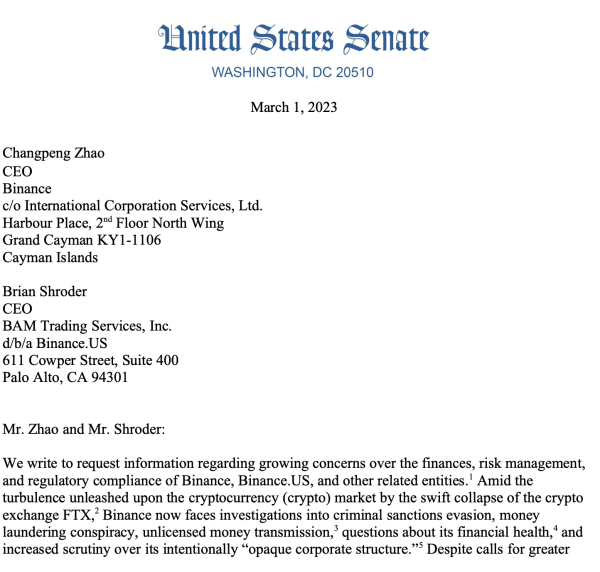
March 27: CFTC strikes with 7 charges
May 5: DOJ also has eyes on Binance
June 5: SEC strikes with 13 charges
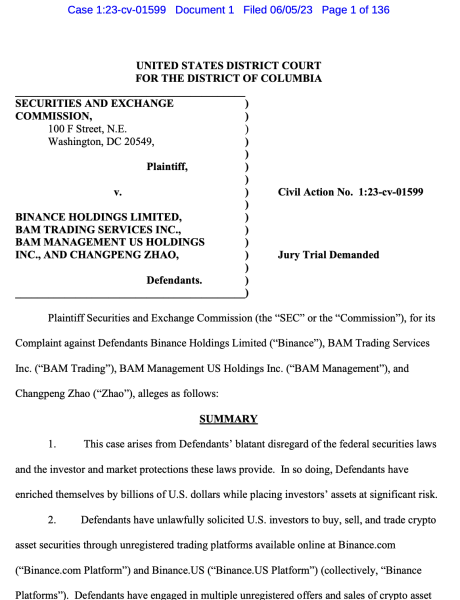
July 6: Binance leadership exodus starts
Aug. 2: DOJ mulls move on Binance
Aug. 14: Binance.US scrambles to block SEC
Sept. 13-14: Binance.US cuts staff, CEO quits and SEC responds
Sept. 19: Binance.US notches minor win against SEC
Sept. 21: Binance wants SEC suit tossed
Oct. 23: Binance wants CFTC suit tossed
Oct. 26: CZ’s wealth drops, Congress wants DOJ to strike
Nov. 21: CZ and Binance indicted