In a blog post, a16z’s Miles Jennings discusses how DAOs can avoid power centralization by applying Machiavelli’s principles.
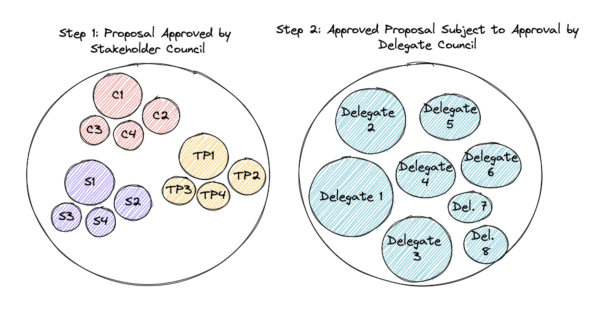
News Principles written almost 500 years ago by Niccolò Machiavelli — author of the controversial political work — are the solution to solving decentralized governance issues in autonomous organizations, according to a blog post by venture capital firm Andreessen Horowitz (a16z). The piece is signed by a16z’s general counsel and head of decentralization, Miles Jennings, who believes that “applying Machiavellian principles to decentralized governance in web3 can address current shortcomings.” According to Jennings, Machiavelli’s philosophy has a pragmatic understanding of struggles of social power, which are similar to those experienced by crypto protocols and their decentralized autonomous organizations (DAOs). Considered the father of modern political theory, Machiavelli was an Italian political philosopher and diplomat. In , he presents fundamental concepts about social power and argues that the ends — particularly the stability of the state — can justify the means, even if those means are ruthless. Jennings uses Machiavelli’s work to discuss how to avoid power centralization. The first concept discussed in the piece relates to the idea that organizations tend toward autocratic leadership, therefore demanding DAOs limit governance by shifting many decisions to the client or third-party layer. According to Jennings: Further, the second principle notes that it’s critical for DAOs to counterbalance power among leadership classes, leaving emerging leaders exposed to open opposition. He suggests DAOs operate with a bicameral governance layer, just as in the United States Congress, which is divided into the House of Representatives and the Senate. Using non-token-based voting systems, like proof-of-personhood, does not help DAOs combat autocracy, suggests Jennings. “While proof of personhood could mitigate a DAO’s vulnerability to attack, it would be unlikely to eliminate autocracy.” The third principle says DAOs should not only have constant opposition but allow new leaders to force their way into the leadership class by creating a churn, preventing a static power balance. “According to the Machiavellians this churn must be forced, as the leadership class will always push against it in order to preserve their position and privilege.” Jennings further notes that community members are often limited in their ability to acquire power in token-based voting systems, given the financial barriers to obtaining such power. Finally, in the fourth principle, Jennings suggests DAOs adopt lockup mechanisms for holders participating in stakeholder councils. “If large groups of people are indeed inherently unable to properly hold their leaders accountable (as the Machiavellians predict), DAOs should seek to implement measures that enhance greater accountability throughout their ecosystems,” reads the document. Jennings notes as a conclusion:

Join us on social networks